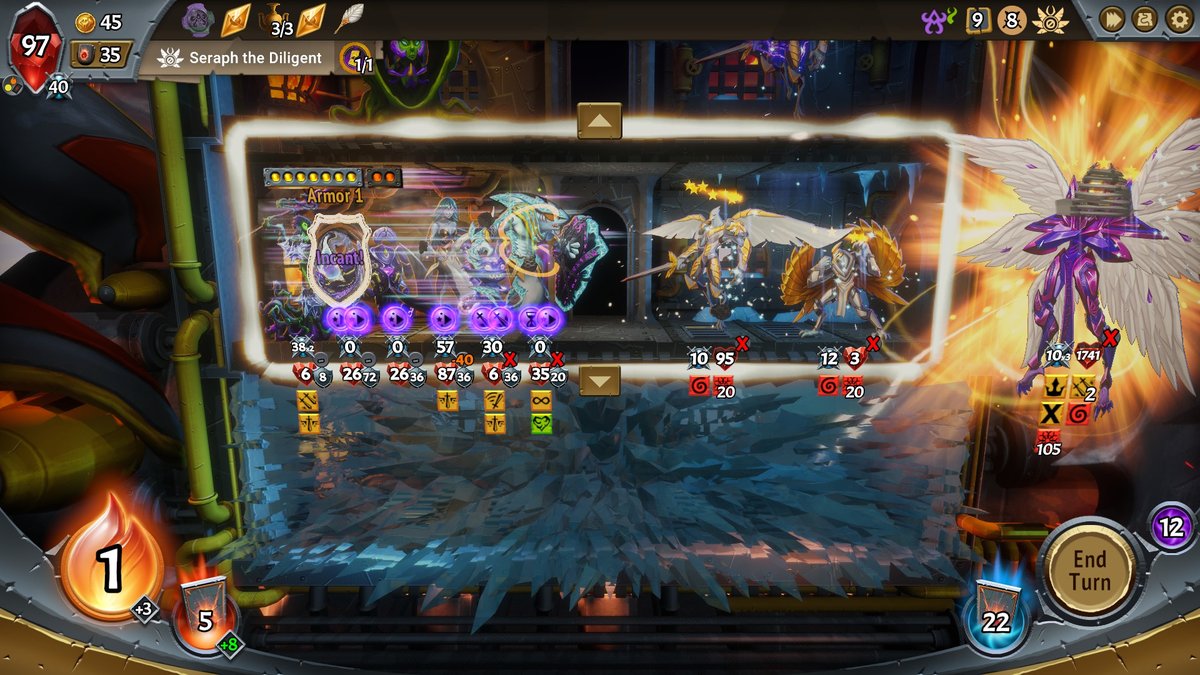
The thrill of carving a path through the Rings of Hell, forging a powerful deck, and ultimately, challenging Seraph himself. Monster Train offers endless replayability, but for those who've conquered every Covenant, mastered every clan, and even survived Hell Rush, there's another peak to summit: Designing Engaging Monster Train Challenges. This isn't just about cranking up enemy stats; it's about crafting a unique puzzle, a fresh narrative that forces players to adapt, innovate, and see the game in a whole new light.
A well-designed challenge feels less like a restriction and more like a revelation. It transforms familiar mechanics, elevates forgotten cards, and celebrates clever synergies. It’s an art form, really, and one that, with the right approach, you can master to leave your mark on the Monster Train community.
At a Glance: Crafting Killer Challenges
- Start with a Core Idea: What unique "what if" scenario do you want to explore?
- Balance & Synergies: Ensure modifiers work together, but also introduce interesting counter-play or trade-offs.
- Leverage Official Examples: Study existing Dimensional Challenges to understand effective modifier combinations.
- Playtest Relentlessly: Your challenge might be fun in theory, but only testing reveals its true difficulty and engagement.
- Clarity is Key: Provide a concise description that guides players without spoiling the fun.
- Avoid Frustration: Distinguish between challenging and outright unfair. Unwinnable scenarios aren't engaging.
The Allure of Custom Mayhem: Why Design Your Own?
Monster Train's genius lies in its depth, but even the most complex systems can feel familiar after hundreds of hours. That's where custom challenges shine. They inject novelty, forcing you to step outside your comfort zone and reconsider fundamental strategies. Beyond personal enjoyment, designing challenges connects you to a vibrant community. You're not just playing a game; you're contributing to its evolving meta, offering a fresh playground for friends and strangers alike.
Think about the daily challenges, where developers throw wild mutators into the mix, creating global competitions. Or the frantic real-time decisions in Hell Rush. Custom challenges empower you to capture that same spirit of inventive play and competition, but with your own unique twist. You become the architect of the fun, shaping the rules of engagement and watching as others rise (or fall) to your creative gauntlet.
Deconstructing a Monster Train Challenge: Your Builder's Toolkit
Before you start layering modifiers, it's crucial to understand the foundational elements of any Monster Train challenge. These are your building blocks, each offering a distinct lever to pull in shaping the player experience:
- Covenant Rank: This sets the baseline difficulty. Lower ranks are more forgiving for concept testing, while higher ranks like Covenant 25 or even the official Covenant 5-6 challenges demand precise execution. Don't immediately jump to maximum Covenant; consider what difficulty best serves your core idea.
- Primary Clan/Champion: Your starting identity. This choice heavily influences early game strategy, available cards, and core synergies. Do you want to highlight a specific Champion path, or does the clan's mechanics complement your modifiers?
- Example: "Weapons Make The Warrior" focuses on Banished/Fel and Pyreborne/Lady Gilda, both of whom can leverage the equipment theme.
- Allied Clan/Champion: Your secondary identity, offering another layer of cards and strategic options. This often provides crucial missing pieces or amplifies existing strengths. How does the allied clan interact with your primary clan and, more importantly, with your chosen modifiers?
- Example: In "Tag Team," Hellhorned/Hornbreaker Prince and Banished/Talos are chosen, but the Prince is replaced by a random non-primary/allied champion, creating an immediate, interesting wildcard.
- Pyre Heart: These are powerful relics that fundamentally alter the game's economy or core mechanics from the outset. They can provide significant buffs, introduce new win conditions, or impose unique limitations.
- Example: "Heart of the Pact" (removes 5 cards, adds a random pact shard each battle) or "Aquath's Reservation" (start with an Artifact, no card drafts). A carefully chosen Pyre Heart can define a challenge's flow.
- Unique Modifiers: This is where your creativity truly shines. Modifiers are the custom rules that twist the core gameplay. They can affect units, spells, resources, enemies, or even the Pyre itself. This is where the magic happens, transforming a standard run into a memorable gauntlet. We'll delve deep into these next.
The Heart of the Matter: Crafting Custom Modifiers that Resonate
Modifiers are the secret sauce of an engaging challenge. They're the rules that make players say, "Wait, I have to think differently here!" They can be subtle nudges or seismic shifts, but their impact should always be intentional. Let's break down common modifier archetypes and how to wield them effectively, drawing inspiration from the game's official challenges.
1. Resource Manipulation: The Economy Game
These modifiers twist how players gain and spend essential resources like Ember (energy), gold, or even card draws. They force strategic rationing or lavish spending.
- "Twofer" (Covenant 1):
Each card draft gains a second copy; Double money/gold; Double stacks of all status effects.This modifier makes scaling incredibly easy, but also makes enemy status effects more potent. The double gold means you can afford more. - "Calculation Station" (Covenant 1):
-3 Ember per turn, gain 20 at the beginning of each battle, start with The Unbroken Horn; Cards are not discarded at end of turn, -2 cards per turn.This entirely changes your hand management. You start with a burst of Ember but then have very little each turn. Not discarding means cards accumulate, so-2 cards per turnbecomes a critical bottleneck. You need to focus on cheap, impactful cards and strong draw. - "Essential Magic" (Covenant 1):
Spells cost -1; Start with Lightstone Casing.Simple, yet profound. Suddenly, expensive spells are cheap, opening up new strategies. - "Bigworm" (Covenant 1):
Lose 1 gold whenever a friendly unit takes damage; Spells cost +1.A brutal combination. Every hit costs you, and your primary removal method (spells) is more expensive. This forces a focus on damage prevention or overwhelming unit power. - "Starter Phase" (Covenant 6):
-1 Ember per turn, +10 Ember; A Merchant of Arms appears in the middle of the tracks after the first battle; Start with Heph's Hammer (Deployable).This offers a big initial burst of Ember but then restricts it, pushing for early, explosive plays and relying on the Merchant of Arms for key upgrades.
Design Insight: Resource modifiers dictate pace. Do you want fast, explosive turns or slow, deliberate builds? Do you want players to feel rich or constantly scrambling?
2. Unit & Stat Alterations: Reshaping Your Army
These modifiers directly affect the stats, abilities, or even size of your units, or enemy units. They can elevate specific archetypes or create new challenges in unit placement.
- "Weapons Make The Warrior" (Covenant 1):
Equipment cards cost 0 and 3 random Equipment cards are added to your starting deck; Attack and health benefits from equipment are doubled; All cards have 1 fewer upgrade slot.This completely re-contextualizes equipment, turning a secondary mechanic into a primary focus. The doubled benefits are huge, but fewer upgrade slots on other cards force tough decisions. - "I'm the Enemy Now!" (Covenant 1):
Friendly units gain Quick; Friendly units Ascend at the end of each turn.Quick makes units hit first, but automatic Ascend means your units are constantly moving up floors. This can be great for Shift effects but terrible for holding a defensive line. You need units that are effective on any floor or can be re-summoned. - "Stop Hitting Yourself" (Covenant 1):
All units gain Multistrike 1; Enemy units enter with Spikes 1; Enemy units gain Spikes 3 when they move.A chaotic modifier! Multistrike for everyone means fights end fast, but the Spikes on enemies (especially 3 on movement) can quickly turn your powerful units into self-destructing bombs. Firebrand's Revenge becomes a powerhouse here. - "Slow and Sloppy" (Covenant 3):
Friendly units Descend at the end of turn; Friendly units enter with +10 Health and Sap 7; All friendly units gain +1 size.This challenge makes your units descend every turn, making it hard to keep a consistent front line. The extra health and Sap 7 are a trade-off: they're tankier but deal significantly less damage initially. Plus, larger units mean less floor capacity. - "Bigger isn't Better" (Covenant 3):
All cards have 1 additional upgrade slot; At start of turn, spawn a Follower unit on a random floor; Each upgrade purchased for a unit increases its size by 1.Extra upgrade slots are enticing, but every unit upgrade makes them bigger, quickly clogging your floors. The random Follower adds more chaos and floor management challenges. - "Entropic Agony" (Covenant 5):
Your Champion enters with Sap 10 and Heartless; Add 5 Deadweights to your starting deck; Friendly units gain Heartless.Heartless units cannot be healed, and Sap 10 means your Champion starts almost useless. This shifts focus entirely to unit scaling or alternative win conditions, and Deadweights become useful for cards that consume Blights. - "Herzal's Heroes" (Covenant 2):
Upgrading Steward units grants an additional +10 Attack and +10 Health; The Champion is removed from your starting deck; All cards have 1 additional upgrade slot.This encourages focusing all your resources on Stewards, making them surprisingly potent. No Champion means you need to scale up quickly, but the extra upgrade slot on all cards provides flexibility.
Design Insight: Unit modifiers define your army's strengths and weaknesses. Do you want glass cannons, unkillable tanks, or a constantly shifting battlefield?
3. Gameplay Mechanics Overhauls: Twisting the Core Rules
These modifiers directly change how core game mechanics function, forcing players to rethink their fundamental approach to combat and progression.
- "Organized Chaos" (Covenant 0):
Spell targets are chosen randomly and Undo is disabled; Start with Volatile Gauge; Shuffle the position of all units in the train after combat.This is pure chaos. Random spell targeting makes precise removal impossible, and unit shuffling means you can't rely on consistent front-liners. Volatile Gauge (start with 25 ember, lose 1 per turn) just adds to the pressure. - "Vampiric Curse" (Covenant 1):
When a non-Champion unit dies, it is purged from your deck; You must purge two cards after every battle; All units enter with Lifesteal 3.This creates a deck-thinning challenge combined with a self-destructing unit strategy. You'll quickly run out of units unless you can endlessly re-summon or duplicate. The Lifesteal is a small consolation. - "Moving Madness" (Covenant 1):
Shuffle the position of all units in the train after combat; All units gain +2 Attack on movement; Enemy units gain Titanite when they are in the front.This is a nightmare for front-lining. Your units constantly shuffle, and if an enemy reaches the front, they gain Titanite, making them incredibly tanky. Prioritizing backline removal and units that don't care about being hit (like Thorned Hollow) is crucial. - "Moon Master" (Covenant 6):
The Full Moon is always active; Friendly units gain Conduit 1 and lose -2 Attack on Mooncycle; -2 unit capacity on each floor.Full Moon being always active means spells are potent, especially with Conduit. But units losing attack on Mooncycle and reduced floor capacity push towards a spell-heavy strategy, making unit-based builds very difficult.
Design Insight: These are the most impactful modifiers. They alter the game's very fabric. Think about how players typically win and then ask, "What if that wasn't possible, or was dramatically different?"
4. Enemy Mutations: The Gauntlet Gets Tougher
These modifiers directly affect enemy units, making them more resilient, dangerous, or introducing new mechanics to contend with.
- "Revenge of the Collectors" (Covenant 1):
Collectors no longer retreat and have increased stats; Spawn an additional Collector in battles that already have a Collector; Enemy units enter with Damage Shield.The Collectors become legitimate threats, but the universal Damage Shield is the true puzzle. You need ways to chip away at shields before dealing real damage. - "Time Bombs" (Covenant 1):
When enemy units die, they deal 5 damage to the front friendly unit; Restore 5 health to all units after combat; Spawn an additional Collector in battles that already have a Collector.Each enemy death becomes a mini explosion, punishing swarms or high Multistrike. Managing front-line health is key. - "Trigger Happy" (Covenant 1):
Triggers on friendly units activate an additional time; Double stacks of all status effects; Enemy units enter with Damage Shield 2.This is a fantastic example of synergy. Duality (double status effects) combined with Highly Reactive (double triggers) makes your units incredibly powerful. But the Damage Shield 2 means you need initial hits to clear it, making Spikes or Sweep units invaluable. - "Golden God" (Covenant 4):
Enemy units enter with Armor equal to 50% of their Health; Friendly units enter with Avarice 5; Spells gain 1 Magic Power per 100 gold at the start of the turn.Enemies are ridiculously tanky from the start due to massive Armor. Avarice 5 provides some initial gold, and saving gold for spell power late game becomes a viable strategy, pushing players towards spell-heavy builds.
Design Insight: Enemy modifiers directly ratchet up the difficulty. Do you want players to struggle with clearing waves, powerful bosses, or specific mechanics like Damage Shield?
5. Pyre Interactions: The Heart of the Matter
These modifiers directly affect your Pyre, making it more vulnerable, stronger, or introducing unique ways it interacts with combat.
- "Body Blocking" (Covenant 6):
At the start of battle, apply Fragile and Damage Shield 2 to your Pyre; Friendly units Ascend at the end of each turn; Restore 5 health to all units after combat.This is brutal. Your Pyre starts incredibly vulnerable with Fragile, meaning every hit is magnified. Damage Shield 2 protects it initially, but if that's breached, it's game over quickly. The auto-Ascend means your Pyre is often undefended. - "Infernal Heat" (Covenant 5):
At the start of battle, apply Inferno Room on all floors; Train Rooms cannot be replaced; Enemy units enter with Reanimate 3, Friendly units enter with Reanimate 1.Permanent Inferno Room means constant damage to units. Combined with enemies having Reanimate 3 (making them come back to life multiple times) and your units only Reanimate 1, survival is a constant struggle. You need units that thrive on death or can quickly out-scale the damage.
Design Insight: Pyre modifiers raise the stakes. Do you want players to feel constant pressure to protect the Pyre, or do you want to create a situation where Pyre health is less of a concern?
6. Deck Manipulation: Shaping Your Card Pool
These modifiers alter how your deck is built, how cards cycle, or what cards you start with, dictating your strategic options.
- "Cheat and Repeat" (Covenant 3):
All spells gain Holdover; Minor bosses enter with Stealth 5; Enemy units enter with Damage Shield.Holdover on all spells is a game-changer. You can play your best spells every turn, but you also have to manage a constantly growing hand of less useful spells. This makes card removal or adding Consume to weak spells paramount. - "Extra Roomy" (Covenant 1):
Room cards cost 0 and 2 random Room cards are added to your starting deck; When a non-Champion unit dies, it is purged from your deck; Spells cost +1.This pushes you towards a strategy built around Room cards, but the unit purging and increased spell cost force careful resource and unit management.
Design Insight: Deck modifiers heavily influence your card pool and turn-to-turn decisions. Do you want a streamlined, consistent deck or a wild, unpredictable one?
The Power of Synergy and Contradiction
The best challenges don't just stack random modifiers; they weave them into a coherent whole.
- Synergy: Modifiers that amplify each other's effects create powerful, defining characteristics. "Trigger Happy" is a prime example: Duality (double status effects) and Highly Reactive (double triggers) combine to four-fold the power of trigger-based units. This isn't just a challenge; it's an opportunity to discover immense power within the new ruleset.
- Contradiction/Trade-offs: Sometimes, modifiers can pull in opposite directions, forcing tough choices. "Slow and Sloppy" gives units extra health but also Sap 7 and Descend, meaning they're tanky but weak and hard to keep on a floor. This creates a puzzle: how do you mitigate the downsides while leveraging the upsides?
When thinking about your own challenge, consider how each modifier interacts with others. Does it create an interesting puzzle? Does it empower a normally weak strategy? Does it demand a completely new way of thinking? To help brainstorm and quickly test different combinations, you might find a tool like a Monster Train 2 challenge generator invaluable for rapid prototyping and seeing how different modifiers might interact.
Balancing the Scales: Making Challenges Fun, Not Frustrating
A "difficult" challenge is engaging; an "unfair" one is instantly abandoned. The line can be thin, but here's how to stay on the right side of it:
- Know Your Covenant: A Covenant 1 challenge can be wild and experimental, but a Covenant 6 challenge needs tighter balancing. The higher the Covenant, the more precise players expect the challenge to be.
- Clarity vs. Obscurity: While some mystery can be fun, your challenge description should give players enough information to grasp the core rules. Don't hide critical modifiers that lead to instant, unavoidable losses. "Organized Chaos" warns you about random spell targeting, so you know what you're getting into.
- Avoid Unwinnable States: A challenge should always have a viable path to victory, even if it's extremely difficult. Infinite scaling enemies, unavoidable Pyre damage, or complete resource starvation without a counterplay are design flaws, not "difficulty."
- Introduce Interesting Decisions: The goal isn't just to make it hard, but to make it interesting. Good modifiers force players to make new choices: "Do I pick this unit, knowing it will get huge and clog my floors?" ("Bigger isn't Better") or "Do I keep this powerful spell, even if it means my hand will be full of duds?" ("Cheat and Repeat").
- Playtest, Playtest, Playtest: You are your first and best tester. Play your challenge multiple times. Can you win it reliably? Do certain clan/champion combinations make it trivial or impossible? Tweak the numbers, swap a modifier, adjust the Pyre Heart, and iterate until it feels just right.
Showcasing Masterful Design: Lessons from Official Challenges
Let's dissect a few more official challenges to highlight effective design principles:
- "Body Blocking" (Covenant 6): This challenge throws multiple harsh modifiers at you: a fragile Pyre, damage shield on the Pyre, and friendly units automatically ascending. The Pyre of Savagery (Pyre gains Rage) is a small consolation.
- Why it works: It forces players to rethink Pyre defense completely. Since units ascend, traditional floor defense is unreliable. You have to find ways to deal with enemies before they reach the Pyre, perhaps through powerful spells, high-damage units on upper floors, or Mute effects to disable dangerous Resolve effects (as suggested in the strategy). It's incredibly hard, but it's a solvable puzzle that demands creative solutions.
- "Cheat and Repeat" (Covenant 3): All spells gain Holdover, minor bosses have Stealth 5, and enemies have Damage Shield.
- Why it works: The Holdover modifier is brilliant because it's a huge boon (you always have your best spells) but also a massive curse (your hand quickly fills with unwanted spells). This immediately creates a new mini-game of hand management and deck thinning. The Stealth and Damage Shield then apply pressure, forcing you to prioritize specific targets and clear shields, making your powerful Holdover spells feel earned.
- "I'm the Enemy Now!" (Covenant 1): Friendly units gain Quick and Ascend at the end of each turn. Map path is automatic.
- Why it works: This challenge is elegantly simple but creates a radically different unit dynamic. Quick is a powerful buff, but automatic Ascend means your units are constantly shifting. This elevates units with "Shift" effects (like Largestone) and makes you think about how to use units that don't need to stay on a single floor, or units that can be endlessly re-summoned. It demonstrates how a single core modifier can completely redefine how units are valued.
Your Blueprint for a Breakthrough Challenge: A Step-by-Step Guide
Ready to forge your own legendary gauntlet? Here’s a structured approach to designing engaging Monster Train challenges:
Step 1: Envision Your "What If?" (The Core Hook)
Every great challenge starts with a central idea. Don't think about specific numbers yet; think about the feeling or the puzzle.
- What if units were constantly moving? (e.g., "I'm the Enemy Now!", "Slow and Sloppy")
- What if all spells were super strong but clogged your hand? (e.g., "Cheat and Repeat")
- What if gold was both abundant and crucial for victory? (e.g., "Golden God")
- What if a specific card type (like equipment) was overpowered? (e.g., "Weapons Make The Warrior")
- What if the Pyre itself was a glass cannon? (e.g., "Body Blocking")
This "what if" is your North Star. It guides all subsequent decisions.
Step 2: Select Your Canvas (Clans, Champion, Pyre Heart)
Once you have your core idea, choose the clans, champion, and Pyre Heart that best support it.
- Clans/Champions: Do you want to encourage a specific clan's mechanics? For "I'm the Enemy Now!" (auto-Ascend), a clan with good "Shift" effects (like Underlegion) or powerful Incant triggers (Stygian Guard) would be natural fits. For a spell-heavy challenge like "Moon Master," Luna Coven is a clear choice.
- Pyre Heart: Does a Pyre Heart amplify your core idea? "Aquath's Reservation" (start with Artifact, no card drafts) is great for challenges focused on limited draw or specific artifact synergies. "Fhyra's Greed" (gain gold after combat) pairs well with gold-focused modifiers.
Step 3: Layer Your Modifiers (Build the Puzzle)
Start with the 1-2 modifiers that embody your "what if," then add supporting or countering modifiers to create depth.
- Core Modifiers: These directly implement your central idea. If your idea is "all units are huge and slow," your core modifiers might be
+1 sizeand-X Speed. - Support Modifiers: These enhance or interact positively with your core. For the "huge and slow" idea, maybe
friendly units start with +Healthto make them true juggernauts, orlose 1 ember per turn, gain X at start of combatto accommodate slower scaling. - Counter/Challenge Modifiers: These add friction or create interesting trade-offs. For the "huge and slow" units, perhaps
enemy units gain Quickorenemy units gain Spike 10 on hit. This forces players to adapt to the downside of their powerful units. - Think in Trios (or more): Many official challenges have 3+ modifiers. This allows for nuanced interactions. For instance, "Twofer" combines double draft, double gold, and double status effects, which are all synergistic and lead to massive scaling.
Step 4: Playtest, Adjust, Refine (The Iterative Loop)
This is non-negotiable. Your challenge will not be perfect on the first try.
- First Pass: Play through your challenge. Is it too easy? Too hard? Is the core mechanic actually fun?
- Identify Bottlenecks: Where do players get stuck? Is it an early boss? Specific enemy types? Lack of resources?
- Tweak & Rebalance: Adjust numbers, swap a modifier, change the Covenant Rank, or even switch clans if necessary. For example, if your "huge units" challenge is too easy, maybe
friendly units also apply Dazed 1 to themselves on play. - Try Different Approaches: Play the challenge using different champion paths or sub-clan choices. Does one approach completely trivialize it? Is another impossible? Aim for multiple viable strategies.
Step 5: Write a Clear, Engaging Description
Finally, present your challenge to the world. A good description doesn't just list modifiers; it frames the experience.
- Hook: A short, evocative sentence or two that captures the essence of the challenge.
- Key Modifiers: Highlight the most impactful rules. You don't need to list every single modifier if they're minor.
- Brief Strategy Hint (Optional): Sometimes a gentle nudge is helpful, like "Focus on X to overcome Y." The official challenge descriptions often include these.
- Difficulty Rating: A subjective but useful indicator for players.
Common Questions About Custom Challenges
- Can I make challenges that use DLC content?
Yes! The game fully supports creating challenges using elements from the "Echoes From the Void" expansion, including the Pyreborne and Underlegion clans, new Champions, and related artifacts. Many official Dimensional Challenges now incorporate these. - How do leaderboards work for custom challenges?
When you create and share a custom challenge, it automatically generates a unique leaderboard for that specific challenge. Anyone who plays it will have their score tracked, allowing for friendly competition among friends or within a community. - What's the difference between custom challenges and daily challenges?
Daily Challenges are officially curated by the developers, feature a pre-set list of modifiers, and rotate daily. They have a global leaderboard for all players. Custom challenges are player-designed, allowing for infinite variety, and generate their own leaderboards for that specific creation. Daily challenges often push the boundaries of modifier combinations, serving as great inspiration for your own designs.
Sharpen Your Skills, Forge Your Legacy
Designing engaging Monster Train challenges is a journey of creativity, problem-solving, and continuous refinement. It’s an opportunity to truly leave your mark on a game you love, offering fresh perspectives and unique puzzles for fellow enthusiasts. Start simple, embrace iteration, and don't be afraid to experiment with wild ideas. The Rings of Hell are vast, and there's always a new way to conquer them. So go forth, design your ultimate gauntlet, and let the challenges begin!