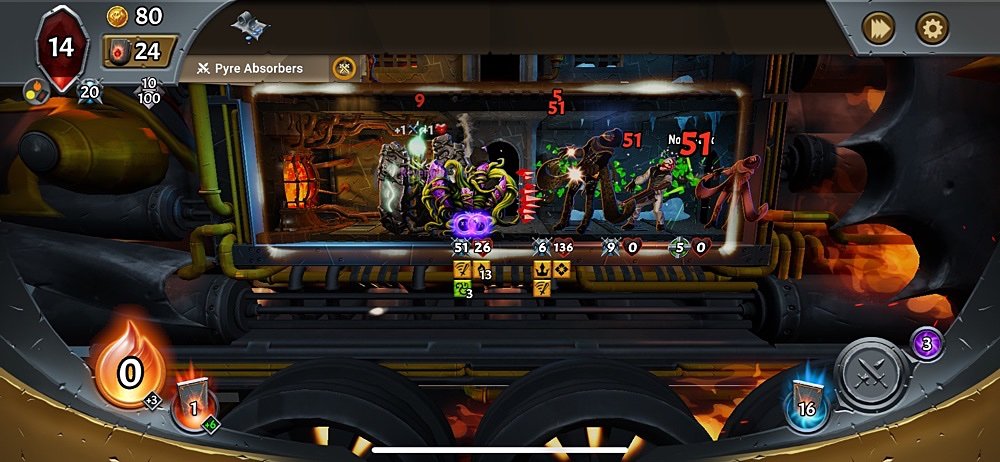
Embarking on a custom challenge in Monster Train isn't just another run; it's a deep dive into the heart of Hell with a twist. The familiar dance of deck-building, unit placement, and pyre protection suddenly gains new layers of complexity, courtesy of unique rule sets and modifiers. Mastering the strategies for beating Custom Monster Train runs consistently means understanding these variables, adapting your approach, and transforming chaos into calculated victory. It’s about leveraging the game's robust mechanics against bespoke hurdles, turning what seems like an unfair fight into an exhilarating triumph.
The beauty of custom challenges lies in their infinite replayability and the cunning puzzles they present. Whether you're chasing high scores on a "Most Difficult" challenge or simply exploring a "Discover Something New" combination of mutators, a systematic approach will elevate your game from mere survival to consistent domination.
At a Glance: Your Custom Challenge Toolkit
- Decipher Mutators First: Each custom run's defining feature. Understand their impact before picking a single card.
- Adapt Your Tempo: Hell Rush timers dictate whether you need early aggression or can afford intricate setups.
- Clan Synergy is King: Always pick a primary and allied clan that complement each other, especially under duress.
- Champion as Cornerstone: Your Champion's upgrade path is critical; align it with your overall strategy and the challenge's specifics.
- Upgrade Smart, Not Much: Prioritize game-changing card upgrades (+10 Damage, Holdover, Endless) over adding mediocre cards.
- Strategic Floor Play: Tanks on the bottom, damage in the middle, pyre protection on top. This fundamental remains vital.
- Boss Preview is Prophecy: Always check the final boss's mechanics to tailor your deck and strategy for the last stand.
- Embrace Experimentation: Custom challenges are designed to break norms. Don't be afraid to try unconventional combos.
What Makes Custom Challenges a Different Beast?
At its core, Monster Train is a roguelike deckbuilder where you defend your pyre from waves of Heaven's forces across three vertical floors. But "Custom Challenges" introduce specific variables that twist the established rules, forcing you to rethink everything.
When you join a challenge, you're not just selecting a primary and allied clan. You're signing up for a specific Covenant Rank, a Hell Rush Option, and up to three game-altering Mutators. These elements aren't mere suggestions; they are the bedrock upon which your strategy must be built. The unique 3-word phrase associated with each challenge is your key to unlocking these specific rule sets, allowing you to replicate or compete in particular scenarios.
- Mutators: These are the primary game-changers. They can be anything from "units cost +1 ember" to "only draw 3 cards per turn" or "all enemy units have Spell Shield." Each mutator demands a specific counter-strategy or deck focus. Ignoring them is a surefire way to derail your run.
- Hell Rush Options: These timers (Off, Fast, Normal, Slow, Slower) dictate how quickly enemies advance floors. A "Fast Timer" demands aggressive, immediate damage or scaling, while a "Slow Timer" allows for more intricate setups and longer-term strategies.
- Scoring Mechanics: While not directly affecting gameplay, understanding how scores are calculated can influence your risk-taking, especially if you're aiming for a spot on the "Highest Scores" leaderboard. Higher Covenant Ranks and more aggressive Pact Shard collection often lead to greater scoring potential, though also significantly increased difficulty.
The Foundation: Solid Core Mechanics in a Shifting Landscape
No matter how wild the mutators get, your success in custom challenges hinges on a deep understanding of Monster Train's core game mechanics. These are your constant tools in an ever-changing environment.
Your Champion: The Heart of Your Deck
Your chosen Champion is central to every run. They aren't just a strong unit; they define your early strategy and often dictate your overall scaling plan. Before every run, and especially in custom challenges, always check your Champion's available upgrade paths.
- The Horned Prince (Hellhorned): Can become a rage-stacking behemoth or a multi-strike monster. If your challenge features mutators that limit unit size or spell casting, a self-sufficient Horned Prince might be invaluable.
- Wyldenten (Awoken): Offers paths for tanking or precise backline sniping. A challenge with many small, dangerous backline units might make Wyldenten's piercing path a priority.
Choose the path that best counters the challenge's mutators and boss fights, or one that synergizes with your primary clan's strengths.
Clan Synergy: A Match Made in Hell
Monster Train's brilliant two-clan system allows for incredible strategic depth. Your primary clan provides your Champion, while your allied clan offers additional units and spells. Selecting the right combination is paramount, particularly when specific mutators are in play.
- Hellhorned (Primary) + Awoken (Secondary): A classic for a reason. Hellhorned brings massive damage and robust front-liners, while Awoken provides critical healing, stat buffs, and thorny retribution. This combo is excellent for beginner runs and adaptable to many custom challenges where sustained frontline presence is needed.
- Stygian Guard (Primary) + Umbra (Secondary): A powerful combination focused on spell damage and Morsel buffs. Stygian units and spells excel at applying Frostbite or sweeping floors, while Umbra provides disposable Morsels to buff your primary units into powerhouses. If mutators restrict unit count, a few highly buffed units with Morsels can be devastating.
- Melting Remnant (Primary) + Any Clan: Melting Remnant's "Endless" and "Reform" mechanics are unique. They thrive on units dying and being brought back stronger. Pairing them with clans that offer strong buffs (Awoken), damage (Hellhorned), or spell synergy (Stygian) can create loops of overwhelming power. This is particularly potent in challenges that limit unit deployment, as you can continuously cycle powerful units.
- Pro Tip: Avoid pairing two inherently "squishy" clans (e.g., Stygian with some Umbra setups without proper tanking). While possible with precise execution, it significantly increases risk, especially under tight Hell Rush timers or damage-enhancing mutators.
Floor Management: The Three Tiers of Defense
Your three defensive floors (Bottom, Middle, Top) are your battleground. Strategic unit placement is a non-negotiable skill.
- Bottom Floor: Your primary defense. Enemies spend the most time here. This is where your main tank, damage dealer, and early scaling units should be placed.
- Middle Floor: Backup defense, excellent for softening up tougher enemies before they reach your top floor, or for housing units that need a turn or two to ramp up.
- Top Floor: Your last line of defense before your pyre takes damage. Often used for backline snipers, spellcasters, or units with "Sweep" that can clear multiple targets.
Always consider the attack patterns of incoming waves and the pathing of your own units. A unit with "Trample" is fantastic on the bottom floor, clearing multiple weak enemies, while a "Multistrike" unit benefits from being protected on a middle or top floor to maximize its output.
Decoding Mutators: The True Test of Adaptation
This is where custom challenges truly diverge. Mutators aren't just annoyances; they are puzzle pieces that demand specific solutions. Read them carefully before you even start the run.
- "Units Cost +1 Ember": This mutator immediately makes high-cost units less appealing. Focus on cheaper units, Ember-generating artifacts, or spells that provide exceptional value for their cost. Clans like Stygian Guard, with many low-cost spells, or Umbra, with Morsel generators, can adapt well.
- "Only Draw 3 Cards Per Turn": Card draw becomes severely limited. Prioritize "Holdover" spells, "Endless" units, and artifacts that provide additional card draw or free plays. Every card must count, and deck thinning becomes even more crucial.
- "All Enemy Units Have Spell Shield": Suddenly, your potent Frostbite spells or Inferno blasts are neutered. You'll need to pivot heavily to unit-based damage, direct damage spells that penetrate shields, or ways to remove spell shield before applying other effects. Hellhorned's raw unit power or Awoken's thorns become far more valuable.
- "All Friendly Units Start Dazed": Units are unable to act for a turn. This heavily favors units that scale passively, provide effects on "Revenge" (when damaged), or units you can safely protect for a turn. "Quick" can help counteract this, as can "Stealth" for crucial damage dealers.
- Pitfall: The biggest mistake is trying to play a custom challenge like a standard run. You must integrate the mutator's effect into your strategy from the very first card draft.
Conquering the Clock: Hell Rush Strategies
The Hell Rush option is your second major strategic consideration, dictating the pace of your run.
- Fast Timer: Demands immediate impact. You need units that come online quickly, deal high damage in the first turn, or scale rapidly. Prioritize units with "Quick" or spells that buff attack or apply debuffs instantly. Early card removal and a streamlined deck are vital to hit your power spikes consistently.
- Normal Timer: Offers a balanced approach. You can build up modest combos, allow units to scale over a couple of turns, and generally play a more typical Monster Train game, albeit with awareness of enemy progression.
- Slow/Slower Timer: The most forgiving timers. These allow for intricate, multi-turn setups, elaborate "Endless" loops, or units that need several turns to reach their full potential. You have more time to draw into specific combo pieces, making "Holdover" spells or card duplicating at Temples even more impactful.
Decision Criteria: How Hell Rush influences your choices: - Fast: Think aggressive, high-impact units (Horned Warrior, Demon Fiend), immediate damage spells (Inferno), and quick scaling (Rage, Multistrike).
- Slow: Consider powerful, but slow-to-start units (Waxen Golem, Bog Chomp), units that need time to generate effects (Morsel-generating units), and complex spell combos.
The Art of Deck Building in Custom Runs
Your deck is your weapon. In custom challenges, every card and every upgrade must serve a purpose, often directly countering a mutator or synergizing with a Hell Rush timer.
Card Upgrades: Precision Over Quantity
You'll encounter many opportunities to add new cards, but in Monster Train, and especially in custom runs, quality often trumps quantity. A few heavily upgraded, game-changing cards are almost always superior to a bloated deck of mediocre ones.
- +10 Damage (or +20): Essential for any damage-dealing unit, especially against high-health bosses or to clear early waves efficiently.
- Holdover: This upgrade allows a spell to return to your hand every turn. It's incredibly powerful for healing spells (e.g., Awakened Sentry), critical buffs (e.g., Rage, Multistrike), or debuffs that you need to apply consistently.
- Endless: A unit with Endless respawns in your hand with 0 cost after it dies. This is fundamental to Melting Remnant strategies, allowing you to cycle powerful units repeatedly. It's also excellent for units with "Harvest" abilities or those that apply useful "Entrance" effects.
- Ember / Cost Reduction: Making key units or spells cheaper can drastically improve your tempo, especially with Ember-restrictive mutators or Fast Hell Rush timers.
Prioritize upgrading cards that are core to your win condition or that directly address a challenge's specific difficulty.
Temples: Duplicating for Power
Temples offer the chance to duplicate any card in your deck. This is a game-changer. Duplicating an already upgraded card, especially one with Holdover or Endless, can cement your entire strategy. Imagine two Holdover healing spells, or two Endless units cycling continuously. It's often superior to adding new, weaker cards to your deck. Use these wisely to double down on your most potent synergies.
Managing Card Count: Lean and Mean
A smaller, more focused deck means you're more likely to draw your key cards when you need them. Prioritize card removal at shops, especially for starting cards that don't fit your chosen strategy. This becomes even more critical with mutators that limit card draw.
Map Navigation: Strategic Pathing to Victory
The map offers a branching path of choices: upgrade shops, battles, merchants, or special events. Your decisions here are just as important as your combat tactics.
- Early Game Focus: In the first two rings, prioritize upgrading your Champion and getting essential upgrades on your core damage-dealing or tanking units. This early power spike helps you survive the initial waves and sets you up for later success.
- Elite Fights: Engage in elite fights for better rewards (artifacts, more powerful card choices), but only if your deck is ready. An unprepared elite fight can severely cripple your run. Weigh the risks against the potential rewards, especially considering mutators and Hell Rush.
- Artifacts: These passive buffs can be run-defining. Keep an eye out for artifacts that synergize with your clan combo, counter a mutator, or boost your economy.
Boss Battles: Adapting to the Apex
Each ring culminates in a boss battle, and understanding your opponent is crucial. Always preview the boss and their specific mechanics before the final fight of a ring. This foresight allows you to make crucial adjustments to your deck and strategy.
- Seraph the Patient: Purges buffs at the end of each turn. This means relying heavily on Rage stacking or long-term buffs is a losing strategy. Focus on direct damage, debuffs, or units that don't need persistent buffs to be effective.
- Seraph the Chaste: Silences units, making their abilities useless. Spell damage and units with strong base stats or "Entrance" effects become more valuable. You might need to pivot away from unit-dependent abilities.
- Seraph the Bound: Applies Daze to your units when they are played. Similar to a mutator, this requires units that are good without immediate action or units with Quick.
- The Last Divinity (DLC): This final boss absorbs buffs from your units. The key here is not to buff units excessively (especially with high Pact Shard counts) but to bring raw, direct damage. Managing your Pact Shards is vital; aim for 80-100 shards for a good balance of challenge and power without making the Divinity fight impossible. If you decide to go for more shards, ensure your deck has enough direct damage or "Harvest"-based scaling to overcome its buff absorption.
Learning from Every Run: Embrace the Chaos
Monster Train's greatest teacher is failure. Custom challenges, by their very nature, encourage experimentation. Don't be afraid to try unusual clan combos, unconventional card choices, or seemingly risky upgrade paths. Sometimes, the most spectacular losses lead to the most profound learning experiences.
- Analyze Your Failures: When a run ends, take a moment to understand why. Was it a specific mutator you didn't adequately counter? Did your Champion path not scale fast enough for the Hell Rush timer? Did you take on an elite battle you weren't ready for?
- Embrace the Unconventional: The developers even feature challenges specifically designed to push the boundaries. This is where you might discover powerful, hidden synergies you'd never consider in a standard run.
Your Next Dive into Hell's Heart
Beating custom Monster Train runs consistently isn't about finding a single cheat code; it's about cultivating adaptability, deep game knowledge, and a willingness to learn. By meticulously dissecting mutators, understanding Hell Rush timings, optimizing your champion and clan synergies, and making smart deck-building decisions, you'll be well-equipped to conquer any challenge Hell throws your way. Now, go forth, forge new paths, and continue the fight against Heaven's forces. Perhaps you'll even design your own devilishly clever challenge. If you're looking for new ideas or want to create your own unique gauntlet, you can generate Monster Train challenges to test your mettle or stump your friends.